Solar Panels and EV Charging: A Home Guide for Placentia Drivers
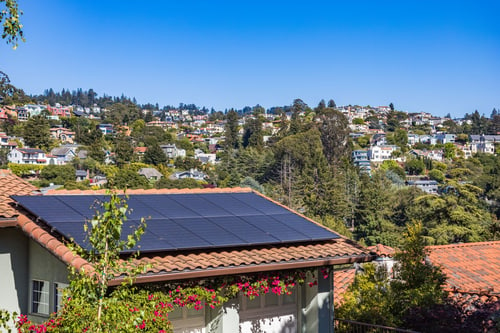
Rooftop solar is a common sight across Placentia, from the ranch homes near Old Town to the newer streets up in Alta Vista, and a growing share of those roofs now sit above a garage with an electric car in it. Pairing solar panels and EV charging is appealing for an obvious reason: the fuel falls out of the sky for free. The catch is timing. Panels make their power in the middle of the day, while many drivers plug in at night, so getting the two to work together takes a little planning. This guide walks Placentia homeowners through charging on solar versus the grid, whether you need more panels, what your electrical panel can handle, and where a home battery fits.
Key Takeaways
- Solar panels produce the most power midday, while most EV charging happens overnight, so the goal is to shift charging toward daylight or store solar for later.
- On SCE's TOU-D-PRIME EV plan, electricity is cheapest from 8 a.m. to 4 p.m. and most expensive from 4 p.m. to 9 p.m.
- Under California's net billing tariff, solar you use yourself is worth more than solar you export, which rewards charging while the sun is up.
- A typical EV uses roughly 27 kWh to travel 100 miles, which helps you estimate how much extra solar an electric car really adds.
- A Level 2 charger may require a dedicated 240-volt circuit and, in some homes, a main electrical panel upgrade before installation.
- A home battery lets you bank midday solar and charge the car after dark without buying expensive evening grid power.
Solar panels and EV charging work best when you match the clock
The core of pairing solar panels and EV charging is timing, not just hardware. Rooftop panels generate most of their electricity in the middle of the day, peaking around noon, then taper off toward sunset. An electric car, meanwhile, is usually parked at work during those hours and plugged in at home overnight. Left on autopilot, a solar home still buys grid power to charge the car at night and sends its own midday solar out to the grid for a smaller credit. The fix is to line the two up, charging when the sun is out or storing that sun for later, so the energy your panels make is the energy your car actually drinks.
Can rooftop solar charge an EV directly? Not quite, and here is how it really works
Solar panels do not plug straight into your car. Rooftop panels feed an inverter that supplies your home's main electrical panel, and your EV charger draws from that panel like any other appliance. You charge "on solar" when the car is pulling power at the same moment the panels are producing it, so the solar serves that load directly instead of flowing out to the grid. When the car needs more than the roof is making, the balance comes from the grid automatically; when the roof makes more than the house and car are using, the surplus is exported. That is why no solar-only charger is required to run an EV on sunshine. A standard Level 2 charger works fine, and the real levers are when you charge and, optionally, a battery or a smart charger that schedules around your production.
Charging on solar costs less than charging on the grid in Placentia
Charging on your own solar is almost always cheaper than charging on grid power, and in Placentia the rate structure widens that gap. Most homes here are served by Southern California Edison, whose EV-focused TOU-D-PRIME plan prices electricity lowest from 8 a.m. to 4 p.m. and highest during the 4 p.m. to 9 p.m. peak. That daytime window lines up almost perfectly with solar production. How exports are valued matters too: under California's net billing tariff, the California Public Utilities Commission credits solar you send to the grid at a wholesale-style value well below the retail rate you would pay to buy it back at night. A kilowatt-hour of solar is simply worth more going straight into your car than sold back to Edison.
Daytime charging captures the most solar; overnight charging needs a plan
If you can plug in while the sun is up, do it. Plenty of households manage this on weekends or a work-from-home day, and some workplaces offer daytime charging as well. For overnight drivers, the practical tool is managed charging: nearly every Level 2 charger and EV app can schedule a start time or cap the charging window. The U.S. Department of Energy's Alternative Fuels Data Center notes that most drivers charge overnight at home and that many utilities offer time-of-use rates to reward off-peak charging. In practice, a scheduling-capable Level 2 charger lets you push charging into the cheapest hours even on days you cannot catch the midday sun directly.
Whether you need more solar panels depends on how far you drive
Adding an EV raises your home's electricity use, so the honest answer to "do I need more panels" is that it depends on your mileage. A typical electric car uses about 27 kWh per 100 miles, per the Alternative Fuels Data Center, so a driver covering 1,000 miles a month adds roughly 270 kWh to monthly demand. Solar manufacturer Enphase recommends sizing a system to cover your home's usage plus the car's anticipated annual charging, rather than treating the EV as an afterthought, and estimates that an average battery-electric car consumes roughly 5,000 kWh a year at about 13,500 miles of driving, a useful benchmark to set against your current output. If your array was sized before you went electric, it may fall short on the car's share, and adding a few panels is often cheaper per kilowatt-hour over the years than buying that power from the grid. A quick look at a year of usage shows how big the gap really is.
Your electrical panel may need attention before a Level 2 charger
Before any solar-and-EV setup works, the car needs a circuit it can actually pull from. A Level 2 charger runs on 240 volts and can draw 40 amps or more, which many older Placentia homes, especially around Old Town, were never wired to spare. If your main panel is near capacity, an electrician may recommend a service or panel upgrade to add the dedicated circuit safely. Homes that also carry solar and a battery have even more to coordinate at the panel, so it pays to have the charger, panel, and any storage planned together rather than bolted on one piece at a time.
Solar plus a home battery lets you charge on sunshine after dark
A battery closes the timing gap between when panels produce and when cars charge. During the day, surplus solar charges the battery instead of being exported for a low credit; after sunset, that stored energy charges your car. Enphase notes that with home batteries you can charge an EV from stored solar or from grid energy banked when prices are low, which beats buying expensive evening power. For a Placentia household on a time-of-use plan, that means sidestepping the 4-to-9 p.m. peak entirely while still running the car largely on your own sunshine. A battery adds cost, so it makes the most sense for drivers who cannot charge during the day and want to lean hardest on self-generated power.
What settles the solar-and-EV question in Placentia
The single thing that decides how well solar and an EV work together is when you can charge. If you can get the car on the charger during Edison's cheap midday window, a modestly sized array may cover most of your driving with little else. If you only charge overnight, the decision shifts toward managed charging and, in time, a battery that carries daytime solar into the evening. Either way, start by pulling a year of your SCE usage and checking what your main panel can support; those two numbers shape every other choice. When you are ready to size the charger or sort out panel capacity, Placentia EV Charger can handle the electrical side of a solar-ready install.
Get a clear estimate for a Level 2 charger and any panel work your Placentia home needs to run on solar.
Instant QuoteGo solar-ready with your EV charging
Whether you are adding panels, a charger, or both, a properly sized circuit is what lets a Placentia home run its car on sunshine. Talk to a local installer about a setup built around how you actually drive.